Systems thinking
I start with data contracts, lineage, failure modes, and operational cost instead of treating pipelines as scripts.
Tokyo, Japan / Geospatial Big Data Engineer
Big data engineer focused on GPS-scale pipelines, spatial analytics, and production data products for smart cities, mobility, and urban planning teams.
I design systems that ingest high-volume location data, validate it, enrich it with spatial context, and ship it as analytics-ready datasets, dashboards, maps, and APIs.
Explore my geospatial data engineer profile for GPS-scale mobility analytics, spatial data pipelines, H3 indexing, Spark, AWS, and ClickHouse work.
8+ yrs
data / ML systems
GPS-scale
mobility analytics
AWS + Spark
cloud data platforms
Tokyo
Japan-based
About
My work sits at the intersection of distributed data engineering and geospatial analytics. I care about the parts that make data products dependable: ingestion contracts, partitioning strategy, spatial indexing, reproducible transformations, cost-aware cloud execution, and clear outputs that technical and non-technical teams can trust.
I start with data contracts, lineage, failure modes, and operational cost instead of treating pipelines as scripts.
I work with coordinates, grids, joins, time windows, OD movement, road volume, and POI footfall as first-class data concerns.
I care about the final consumer: analysts, researchers, consultants, dashboards, APIs, and map-based workflows.
Case studies
These are public-safe summaries of real production patterns: ingestion, spatial enrichment, serving layers, optimization, and operational workflows.
LocationMind / GPS-scale geospatial pipelines
Problem
Raw mobility inputs are noisy, high-volume, and difficult to reuse across research, consulting, analytics, and product workflows.
Solution
Designed reproducible ingestion and transformation layers that validate, normalize, aggregate, enrich, and prepare location records for downstream analytics.
Impact
LocationMind / Urban planning and location intelligence
Problem
Urban and mobility teams need reliable views of movement patterns without manually interpreting raw GPS trajectories.
Solution
Built analytical outputs for OD movement, road-volume intensity, and POI-footfall patterns using spatial aggregation and map-ready data products.
Impact
GridSolutions / Optimization and platform integration
Problem
Pricing workflows needed optimization logic that could be integrated into operational systems and maintained over time.
Solution
Implemented optimization modules, API interfaces, and OpenADR-related integrations while improving architecture reliability.
Impact
Smart Data Solutions / OCR and operational automation
Problem
Scanned claims required structured extraction and classification before they could move efficiently through operational workflows.
Solution
Combined OCR extraction, text classification, rule-based extraction, NER, and interface improvements to support faster manual review.
Impact
System design
The site now exposes architecture thinking directly instead of hiding it inside tool lists.
A reusable pattern for turning high-volume GPS data into analytics-ready spatial features and product outputs.
A serving layer designed for teams that need fast comparison across movement metrics, time windows, and geographic cells.
Skills
The stack matters because it supports large-scale movement data, spatial context, reliable pipelines, and fast serving layers.
Designing batch and streaming pipelines with explicit data contracts, validation, partitioning, orchestration, and observability.
Shipping data products on cloud infrastructure with cost-aware execution, containerized services, and production deployment habits.
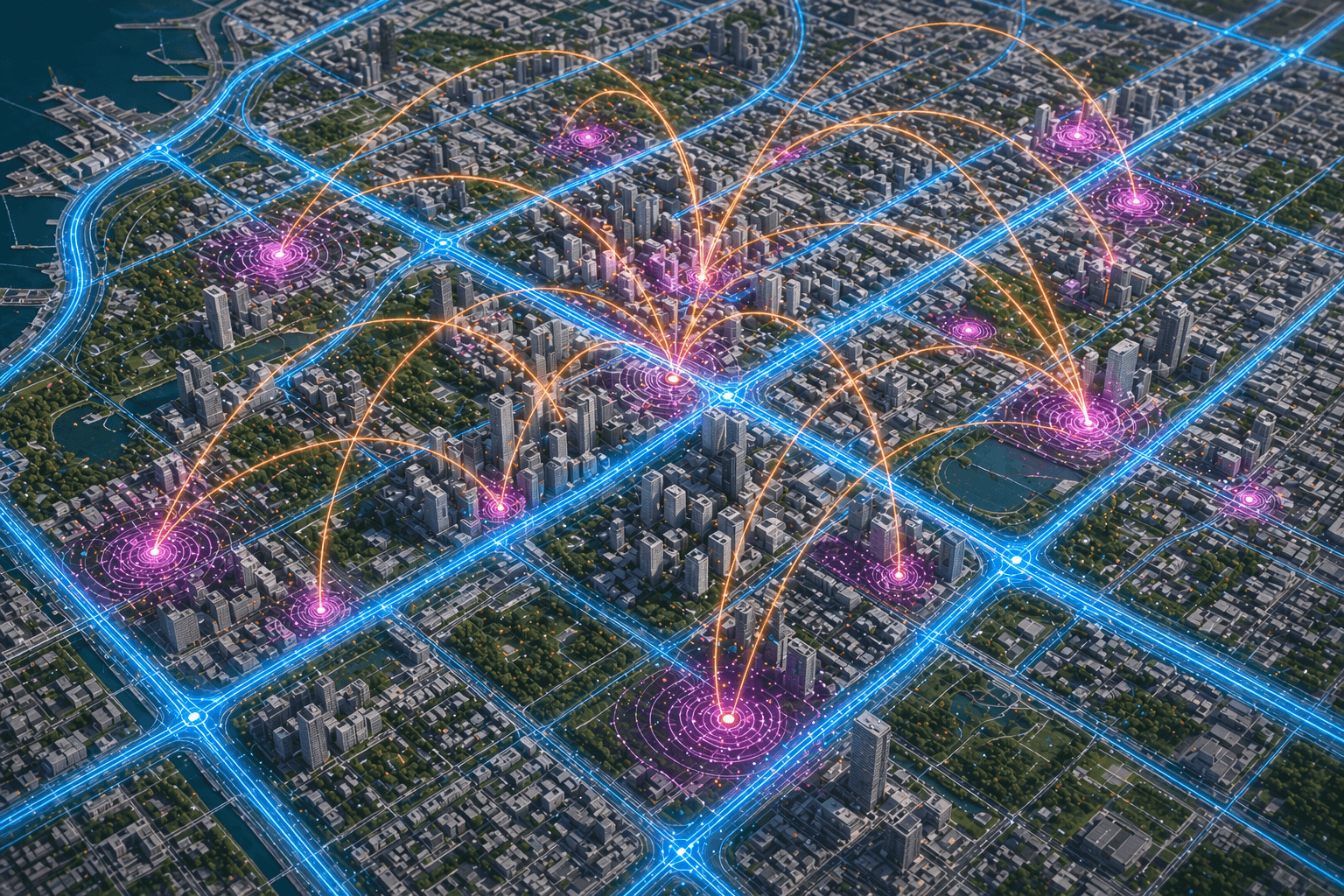
Turning raw mobility traces into spatially indexed, map-ready analytics for people-flow, OD movement, road volume, and POI footfall.
Experience timeline
The through-line is production work: data quality, integration, cloud systems, operational reliability, and useful outputs.
Building mobility and geospatial data pipelines that transform raw GPS-scale inputs into people-flow analytics, map-ready outputs, and decision products.
Delivered optimization and integration systems for energy pricing workflows, including business logic, APIs, and OpenADR VEN projects.
Led delivery of machine-learning-backed APIs and cloud services, bridging implementation architecture with client-facing product needs.
Jul 2018 - Nov 2019
Smart Data Solutions / Full-time
Kathmandu, Nepal
Built OCR and document-intelligence workflows for scanned claims, combining extraction, classification, and operational interface improvements.
Tech blog / insights
Areas I keep sharpening through production work, architecture decisions, and practical geospatial data-system design.
Spatial indexing
How to choose resolution, partitioning, and aggregation boundaries when GPS events need to become reusable spatial features.
Data reliability
Practical validation patterns for timestamp consistency, coordinate sanity, duplicate trajectories, and downstream trust.
Serving layer
Where columnar serving fits after Spark transformations, and how to think about query shape, rollups, and product latency.
Education
Formal computer science training supports the later career arc across software systems, data platforms, machine learning, and cloud applications.
Nepal
Deerwalk Institute of Technology, Tribhuvan University
Bachelor of Science in Computer Science and Information Technology from Deerwalk Institute of Technology, affiliated with Tribhuvan University, grounding later work in software systems, data platforms, and applied machine learning.
Contact
Reach out if the problem involves high-volume data, spatial analytics, distributed pipelines, or turning complex data into something a product team can operate.